

Most marketing is built on what the business believes its audience cares about.
That belief usually comes from social media – from comments, from engagement, from the conversations that happen publicly around the brand or the category. Social data is visible, accessible, and easy to interpret. So it becomes the primary evidence base for what the audience wants.
The problem is that social media captures what people are willing to say out loud. Search data captures what they actually want to know.
These are not the same thing. And the gap between them is often the gap between the message the marketing is currently built on and the one that would actually convert.
Why social data and search data tell different stories
Social media is a public space. People share what they want others to see – opinions they want to associate with, humour they want to be known for, causes they want to be connected to. The content is filtered through the question of how it will land with an audience.
Search is private. Nobody is watching. The queries entered into Google are honest in a way that social posts are almost never honest – because there is no audience to perform for.
A quick illustration. Run a social listening analysis on “ugali” – the Kenyan staple – and the conversations are predominantly light-hearted. Memes, jokes, cultural commentary, the kind of content people share because it generates a response.
Run the same analysis on search data and the queries are completely different. Health concerns. Nutritional questions. Cooking methods for specific situations. The private, functional questions people would never post publicly because they are not designed to be seen.
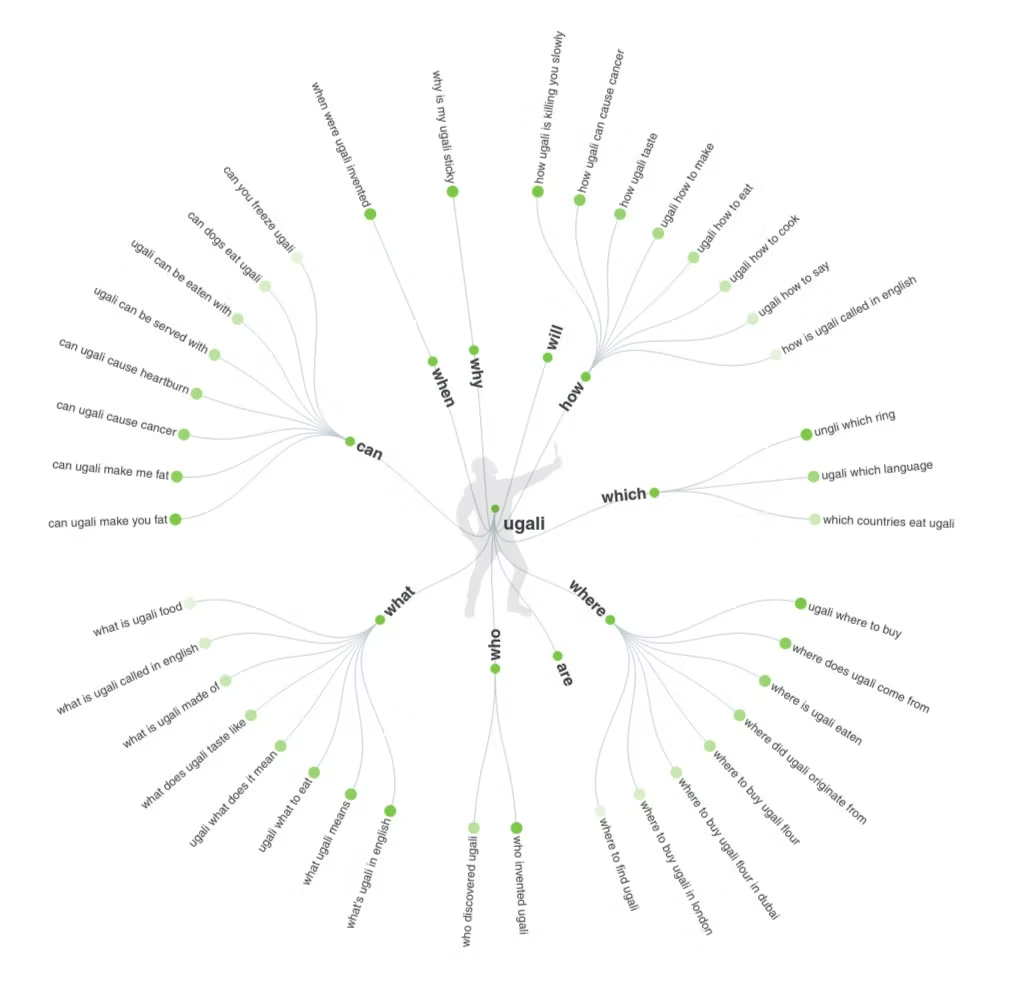
Same topic. Two entirely different pictures of what the audience actually needs. This is not a trivial data observation. It is a positioning problem.
What the gap reveals about your marketing
If your marketing is built primarily on social data – on what your audience engages with publicly, what generates comments, what performs well on the feed – you are building on the filtered version of your buyer.
The unfiltered version is in the search data. The questions they type when nobody is watching. The problems they are trying to solve at 11pm when they are not performing for an audience. The language they use when they are being honest about what they need rather than what they want to be seen wanting.
The gap between those two pictures is almost always present. It is not always significant. But when it is, it explains a specific and common failure: marketing that performs well on social – good engagement, growing reach, strong response to content — that does not convert to enquiries or sales.
The audience is engaging with the version of the brand that social data produced. They are not buying from it because the message does not speak to the version of their need that only search data reveals. This is the positioning gap that looks like a visibility problem from the outside and requires a positioning examination to resolve.
What search listening specifically surfaces
Search data surfaces three things that social data cannot.
The private question. The query that nobody asks on social media because it reveals something vulnerable — a problem, an uncertainty, a gap in knowledge. For a financial services brand, the social conversation might be about growth and ambition. The search data reveals questions about debt, fear, and what happens when things go wrong. Both are real. The marketing that speaks only to the public conversation misses the private one entirely.
The intent behind the search. Someone searching “best affordable smartphones in Kenya” is much closer to a purchase decision than someone engaging with a post about smartphones. The search query reveals where in the decision the buyer actually is – which is the information that determines what the marketing needs to say to move them forward.
The language the buyer uses. Search queries are written in the buyer’s own words – unedited, unfiltered, exactly as the buyer thinks about the problem. The gap between that language and the language the business uses to describe its solution is often the gap between content that ranks and converts and content that ranks and does not.
How to use the gap commercially
The gap between social listening and search listening is not a data problem to be solved. It is a positioning signal to be read.
When social engagement is high but conversion is low, look at the search data for your category. The queries being asked — the ones with significant volume that your brand is not addressing – are almost always pointing at the real buyer concern that the social-led marketing has not yet reached.
When the search data and social data are telling coherent stories – when the public conversation and the private queries are aligned – the positioning is working. The marketing is speaking to the same person in both channels.
When they diverge significantly, the positioning needs examination. Not because the social performance is wrong, but because the buyer who converts is the one whose private question was answered – not the one whose public identity was reflected back.
The Data Analytics and Reporting capability builds the listening infrastructure that makes this gap visible. But the interpretation – what the gap means for the positioning and the message – is the work that the Market Position Review is designed to do.
Find out what the gap between your social and search data is telling you about your positioning